Robotic assistance
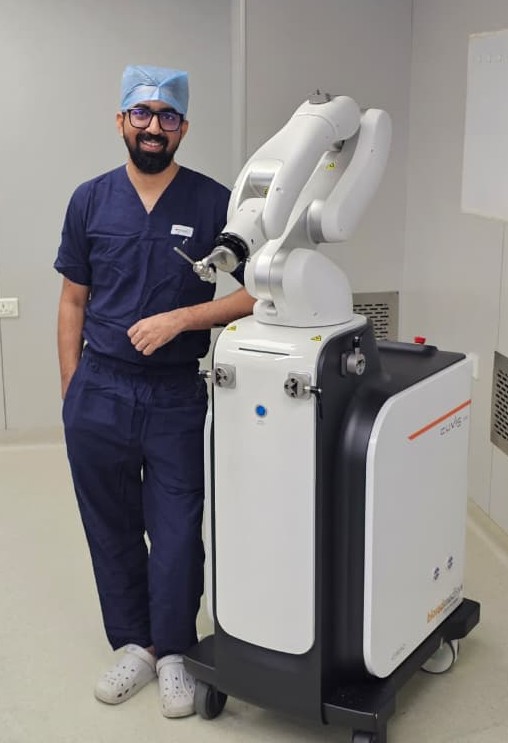
The robotic system Dr. Patel uses.
Surgeon-led
The system never operates on its own.
Robotic-assisted joint replacement
Robotic-Assisted Joint Replacement in Ahmedabad
By Dr. Kalpesh C. Patel · Consultant Orthopaedic Surgeon
Computer-guided planning and real-time mapping, so the implant is positioned to your anatomy rather than an average.
M.S. Orthopaedics
Arthroplasty fellowship, Taiwan
Practising since 2016
Since 2016
Practising in Ahmedabad
Your surgeon
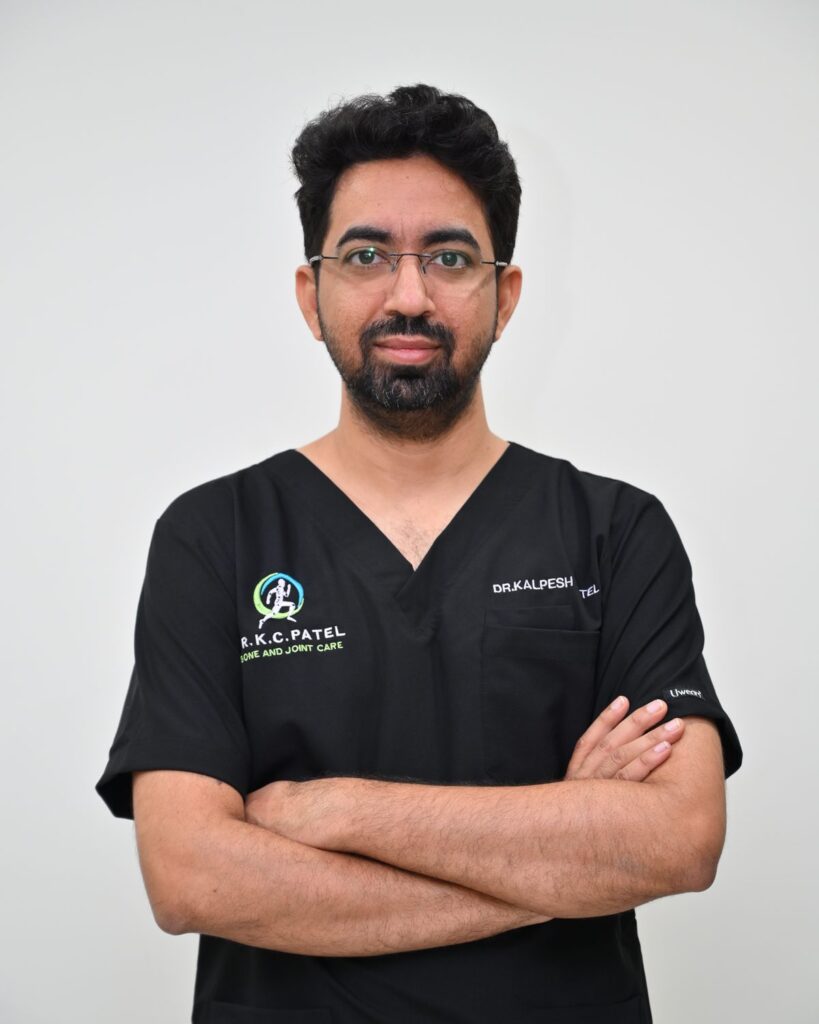
Meet Dr. Kalpesh C. Patel
Consultant Joint Replacement & Shoulder Surgeon
Dr. Patel trained in arthroplasty at Chang Gung Memorial Hospital in Taiwan and holds fellowships in revision arthroplasty and shoulder surgery. He has practised in Ahmedabad since 2016, with a focus on knee and hip replacement — including robotic-assisted and revision surgery.
M.B.B.S.
M.S. Orthopaedics
International Fellowship · Joint Replacement, Taiwan
Fellowship · Shoulder & Sports Injury, Pune
9+
Years in orthopaedics
2
Fellowships
5
Peer-reviewed publications
The technology
What robotic-assisted surgery actually means
The robot does not perform the operation. The surgeon does. What the system adds is measurement: a three-dimensional model of your joint, a plan built on it, and live feedback confirming the surgeon is carrying out that plan precisely.
In conventional replacement, alignment is judged using mechanical guides and experience. The robotic system replaces that judgement with measurement — which matters most in the cases where anatomy is unusual.
What the system provides
- 3D model of your joint before surgery
- Plan built on your anatomy, not an average
- Real-time alignment feedback during surgery
- Soft-tissue balance measured, not estimated
- Healthy bone preserved wherever possible
Where it matters most
- Deformed or unusual anatomy
- Joints that have had previous surgery
- Cases where precise balance is critical
How it works
How a robotic procedure runs
Four steps, all led by your surgeon.
Mapping
Your joint is mapped in three dimensions at the start of surgery.
Planning
Implant size and position are planned against that model.
Execution
The surgeon operates with live feedback confirming the plan.
Verification
Alignment and balance are checked before closing.
Robotic vs conventional replacement — an honest comparison
| Conventional | Robotic-assisted | |
|---|---|---|
| Alignment | Mechanical guides and surgeon judgement | Measured, not estimated |
| Planning | Standard instrumentation | A plan built on your own 3D joint model |
| Consistency | Varies more from case to case | More consistent implant positioning |
| Evidence | Decades of long-term outcome data | Long-term data still maturing |
| Time and cost | Shorter time in theatre; lower cost | Higher cost |
| Best suited to | Excellent results in straightforward anatomy | Advantage grows with anatomical complexity |
Why it can matter
Benefits are strongest in complex anatomy. For a straightforward joint, a well-performed conventional replacement remains an excellent operation.
Alignment Accuracy
Implant position measured continuously rather than judged by eye.
Bone Preservation
Only damaged bone is removed, keeping options open for the future.
Ligament Balance
Soft-tissue tension measured through the full range of movement.
Personalised Fit
The plan follows your anatomy rather than a standard template.
Complex Cases
Most valuable where deformity or prior surgery complicates the anatomy.
Reproducibility
Less case-to-case variation in how the implant is positioned.
Risks and limitations
Risks, complications and limitations
Robotic assistance improves accuracy; it does not remove the risks of joint replacement. Your individual risks are discussed with you before any decision is made.
Infection
Uncommon, but taken seriously before, during and after surgery.
Blood clots
Reduced with early walking and preventive measures after surgery.
Stiffness or ongoing pain
Some joints stay stiff or sore. Physiotherapy is the main defence.
Implant wear over time
Implants can wear or loosen after many years and may need revision.
Recovery
What recovery looks like
Timelines vary between patients. This is the typical path.
Before
Assessment and planning
Examination, imaging and a plan for your joint — including whether surgery is needed at all.
Day 0–1
Surgery and first steps
Surgery, then first steps with support the same or next day.
Week 1–2
Home exercises
Home exercises begin; wound review.
Week 3–6
Walking unaided
Walking unaided for most patients; physiotherapy intensifies.
Week 6–12
Back to normal activity
Return to driving, work and normal daily activity.
3 months +
Continued improvement
Strength and comfort keep improving over the following months.
Why Dr. Patel
Why patients choose Dr. Patel for robotic surgery
Planned on your anatomy
Implant size and position planned on a 3D model of your joint.
Revision expertise
A dedicated fellowship in revision arthroplasty — for joints that have had surgery before.
Fellowship-trained
Arthroplasty training at Chang Gung Memorial Hospital, Taiwan.
Honest advice
Including when surgery isn’t the right answer yet.
Published research
Five peer-reviewed publications in orthopaedics.
Ahmedabad and Gandhinagar
Consulting at Health1 Thaltej, Ahmedabad and SGS Health1 Kudasan, Gandhinagar.
Common questions
Questions patients ask
Still unsure? Bring your questions to the consultation — that is what it is for.
No. The surgeon performs every part of the operation. The system provides planning and live measurement — it cannot act on its own.
Not automatically. The advantage is clearest in complex or deformed anatomy. For a straightforward joint, a well-performed conventional replacement remains an excellent operation.
Generally yes, because of the equipment involved. The cost is discussed openly during consultation before anything is scheduled.
Often comparable. The meaningful difference is inside the joint — how precisely the implant is positioned — rather than the size of the scar.
It depends on your anatomy, the degree of deformity and any previous surgery. That assessment is part of the consultation.
Patient stories
Back on their feet after knee replacement
Patients describe their knee replacement journey in their own words.
Two sisters, side by side to knee replacement
Both knees operated together
Book a consultation
See Dr. Patel in Ahmedabad or Gandhinagar
A consultation tells you where you stand — including whether you need surgery at all.
AhmedabadHealth1 Super Speciality Hospital, Shilaj Circle, Thaltej
10:00 AM – 12:00 PM & 4:00 – 6:00 PM, by prior appointment
GandhinagarSGS Health1 Hospital, Pramukh Anand Orbit Mall, Kudasan
8:00 – 10:00 AM, by prior appointment
OPD visitsVijapur · Idar · Himmatnagar · Visnagar · Mehsana
AppointmentsBy prior appointment only — call +91 75678 70528 to confirm the day.
How to book
- Call or WhatsApp the clinic.
- Choose Ahmedabad or Gandhinagar, and a time that suits you.
- Bring previous X-rays, reports and a list of your medicines.