Revision arthroplasty and joint infection.
The accepted approach for an infected joint.
Revision joint replacement
Revision Joint Replacement in Ahmedabad
By Dr. Kalpesh C. Patel · Consultant Orthopaedic Surgeon
When a knee or hip replacement loosens, wears out, becomes unstable or gets infected, it can be replaced again. This is the work Dr. Patel trained in at Chang Gung Memorial Hospital, Taiwan.
M.S. Orthopaedics
Arthroplasty fellowship, Taiwan
Practising since 2016
Practising in Ahmedabad
Your surgeon
Meet Dr. Kalpesh C. Patel
Consultant Joint Replacement & Shoulder Surgeon
Dr. Patel trained in arthroplasty at Chang Gung Memorial Hospital in Taiwan and holds fellowships in revision arthroplasty and shoulder surgery. He has practised in Ahmedabad since 2016, with a focus on knee and hip replacement — including robotic-assisted and revision surgery.
M.B.B.S.
M.S. Orthopaedics
International Fellowship · Joint Replacement, Taiwan
Fellowship · Shoulder & Sports Injury, Pune
Years in orthopaedics
Fellowships
Peer-reviewed publications
Understanding the procedure
What is revision joint replacement?
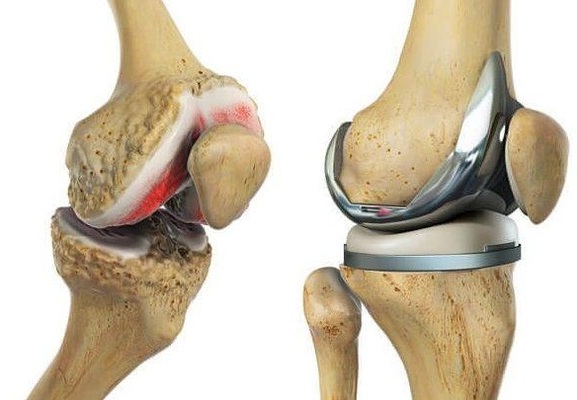
A revision is a second operation on a joint that has already been replaced. The worn, loose or infected parts are removed and new components are fitted, sometimes with bone graft or specialised implants where bone has been lost.
It is more demanding than a first-time replacement: the old implant has to come out without damaging the bone around it, and the new one has to hold in bone that is no longer untouched. Planning, imaging and the right implants on the shelf matter as much as the surgery itself.
Signs your replacement may be failing
- Pain returning after years of comfort
- Swelling, warmth or a discharging wound
- The joint giving way or feeling unstable
- Difficulty bearing weight, or a change in leg length
Things that are usually not a failing implant
- Stiffness in the first weeks after surgery, which physiotherapy still improves
- Pain coming from the back, hip or knee next to the replaced joint
- Occasional clicking without pain or instability
Why replacements fail
Why a joint replacement fails
Finding the reason comes first. A revision done without knowing why the first one failed tends to fail again.
Loosening
The implant loses its grip on the bone over the years, and the joint becomes painful on weight-bearing.
Infection
Bacteria settle on the implant surface. This needs treating as an infection, not simply as a worn joint.
Instability
The joint gives way or dislocates because the soft-tissue balance or implant position is not right.
Wear of the bearing
The plastic bearing wears over many years, and the debris can loosen the implant.
Fracture around the implant
A break in the bone next to the implant, usually after a fall, often needs fixation or revision.
Stiffness or malposition
A joint that never moved well, or an implant sitting in the wrong position, can be corrected.
What each problem usually needs
| Usual treatment | |
|---|---|
| Loosening | Revision of the loose component, with bone graft where bone has been lost. |
| Infection | Usually a two-stage revision: the implant is removed, the infection treated, and a new joint fitted once it has cleared. |
| Instability | Revision to correct implant position or soft-tissue balance, sometimes with a more constrained implant. |
| Bearing wear | Exchange of the worn bearing where the fixed parts are still sound. |
| Fracture around the implant | Fixation of the fracture, or revision to a longer stem if the implant is loose. |
Revision procedures offered
Revision Knee Replacement
For loosening, wear, instability or stiffness after a knee replacement.
Revision Hip Replacement
For loosening, wear, recurrent dislocation or leg-length problems after a hip replacement.
Two-Stage Revision for Infection
Removal of the infected implant, a course of treatment, then a new joint once the infection has cleared.
Periprosthetic Fracture Surgery
Fixation or revision for a fracture in the bone around an existing implant.
Before revision surgery
Finding out why it hurts
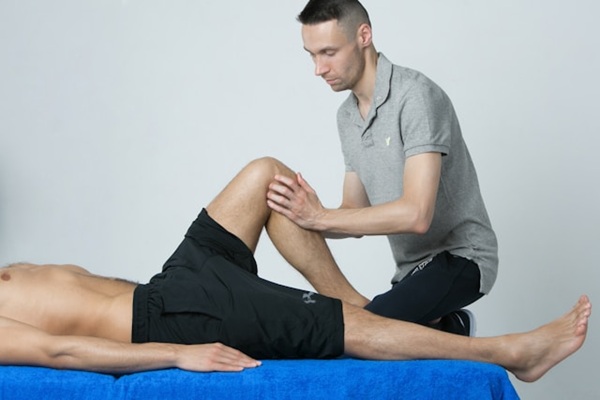
A painful replacement is investigated before anything is planned. Sometimes the implant is sound and the pain is coming from elsewhere, in which case revision is not the answer.
Examination and X-rays, and scans where needed
Blood tests for infection
Sampling fluid from the joint where infection is suspected
Checking the back, hip or knee next to the replaced joint
Risks and limitations
Risks, complications and limitations
Revision surgery carries more risk than a first-time replacement, and that is discussed openly before any decision is made.
Infection
A higher risk than in first-time replacement, and taken seriously at every stage.
Bone loss
Removing an implant costs bone. Graft or specialised implants may be needed to rebuild support.
Longer surgery and recovery
Revisions take longer than first-time replacements, and recovery is usually slower.
A result short of a new joint
A revised joint is often good, but it may not match a well-functioning first replacement.
Why Dr. Patel
Why patients are referred for revision surgery
Fellowship training in revision
Revision arthroplasty and periprosthetic joint infection formed part of the Taiwan fellowship.
The cause first
The reason for failure is established before a revision is planned.
Fellowship-trained
Arthroplasty training at Chang Gung Memorial Hospital, Taiwan.
Honest advice
Including when surgery isn’t the right answer yet.
Published research
Five peer-reviewed publications in orthopaedics.
Ahmedabad and Gandhinagar
Consulting at Health1 Thaltej, Ahmedabad and SGS Health1 Kudasan, Gandhinagar.
Common questions
Questions patients ask
Still unsure? Bring your questions to the consultation — that is what it is for.
Modern implants commonly last 15–20 years or more. Longevity depends on age, weight and activity.
Yes. There is more infection risk, more bone loss and a longer recovery. It is still the right answer when a joint has failed.
Blood tests, fluid taken from the joint and imaging. Infection changes the whole plan, so it is ruled in or out before surgery.
Often yes. A two-stage revision removes the infected implant first, and the new joint is fitted once the infection has cleared.
Yes. Bring your operation notes and implant details if you have them, along with previous X-rays.
Then revision will not fix it. That is exactly what the assessment is for, and you will be told so plainly.
Book a consultation
See Dr. Patel in Ahmedabad or Gandhinagar
A consultation tells you where you stand — including whether you need surgery at all.
AhmedabadHealth1 Super Speciality Hospital, Shilaj Circle, Thaltej
10:00 AM – 12:00 PM & 4:00 – 6:00 PM, by prior appointment
GandhinagarSGS Health1 Hospital, Pramukh Anand Orbit Mall, Kudasan
8:00 – 10:00 AM, by prior appointment
OPD visitsVijapur · Idar · Himmatnagar · Visnagar · Mehsana
AppointmentsBy prior appointment only — call +91 75678 70528 to confirm the day.
How to book
- Call or WhatsApp the clinic.
- Choose Ahmedabad or Gandhinagar, and a time that suits you.
- Bring previous X-rays, reports and a list of your medicines.