Subvastus approach
The quadriceps tendon is not cut.
Fast recovery
First steps with support the same or next day.
Knee replacement
Total Knee Replacement in Ahmedabad
By Dr. Kalpesh C. Patel · Consultant Orthopaedic Surgeon
A worn-out knee replaced with a modern implant — with robotic planning, the muscle-sparing subvastus approach and a fast-recovery programme.
M.S. Orthopaedics
Arthroplasty fellowship, Taiwan
Practising since 2016
Since 2016
Practising in Ahmedabad
Your surgeon
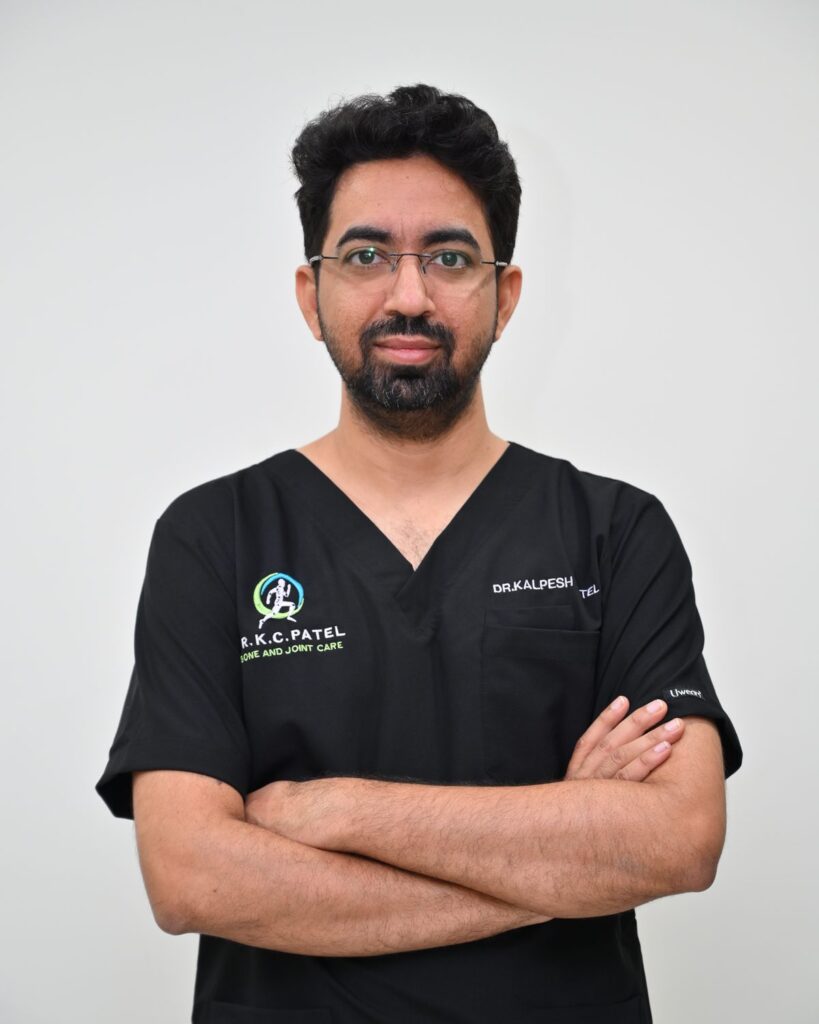
Meet Dr. Kalpesh C. Patel
Consultant Joint Replacement & Shoulder Surgeon
Dr. Patel trained in arthroplasty at Chang Gung Memorial Hospital in Taiwan and holds fellowships in revision arthroplasty and shoulder surgery. He has practised in Ahmedabad since 2016, with a focus on knee and hip replacement — including robotic-assisted and revision surgery.
M.B.B.S.
M.S. Orthopaedics
International Fellowship · Joint Replacement, Taiwan
Fellowship · Shoulder & Sports Injury, Pune
9+
Years in orthopaedics
2
Fellowships
5
Peer-reviewed publications
Understanding the procedure
What is total knee replacement?
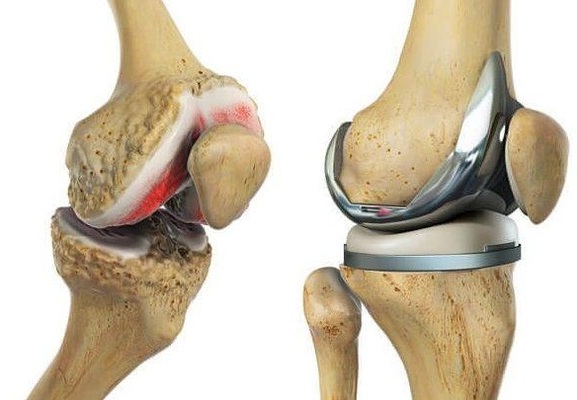
In a total knee replacement, the worn surfaces of the thigh bone and shin bone — and sometimes the back of the kneecap — are resurfaced with implant components and a smooth bearing between them.
It is considered when arthritis affects the whole knee and conservative treatment no longer controls pain. How the operation is done matters as much as the implant: Dr. Patel combines robotic planning, a muscle-sparing approach and early movement so you are up and walking sooner.
When to book an appointment
- Knee pain that disturbs sleep
- Stiffness that limits stairs or walking distance
- Bow-legged or knock-kneed deformity getting worse
- Conservative treatment no longer effective
When it may not be needed yet
- Pain that still responds to physiotherapy, weight management or injections
- Early arthritis with good day-to-day function
- Arthritis in one compartment only — a partial knee may suit you
How it is done
Techniques and implant options
Your operation is planned around your knee, your activity level and any metal allergy.
Robotic knee replacement
Planned on a 3D model built from a CT scan of your knee, with the bone cuts made precisely to that plan.
Subvastus approach
The knee is opened from beneath the vastus medialis muscle instead of cutting the quadriceps tendon — which can mean less early pain and quicker return of leg control.
Fast-recovery programme
Pain relief planned so you can move early, first steps with support the same or next day, and physiotherapy from the start.
Ceramic knee
An implant with a hard, ceramic-like bearing surface designed to reduce wear of the plastic insert — often considered for younger, more active patients.
Gold knee
A titanium-niobium-nitride (gold-coloured) coating over the metal implant — an option for patients with a nickel or metal allergy. It is a coating, not solid gold.
Rotating platform & medial pivot
Designs whose bearing rotates, or which follow the knee’s natural pivot, chosen to suit how your knee moves.
Hi-Flex knee
A design intended for deeper bending, where sitting cross-legged or kneeling matters to you.
Chosen for you
Implant and technique depend on your age, activity, bone quality and allergy history, and are discussed at consultation.
Knee implant options at a glance
| Standard knee | Ceramic knee | Gold knee | |
|---|---|---|---|
| Surface | Metal alloy | Hard ceramic-like surface | Titanium-niobium-nitride (gold-coloured) coating |
| Main reason to choose | Proven and widely used | Designed for lower bearing wear | Metal (e.g. nickel) allergy |
| Often considered for | Most patients | Younger, more active patients | Patients with metal sensitivity |
From a real case
Your knee, planned in 3D before surgery
Where robotic planning is used, the operation is worked out on a model built from a CT scan of your own knee before anything is cut.
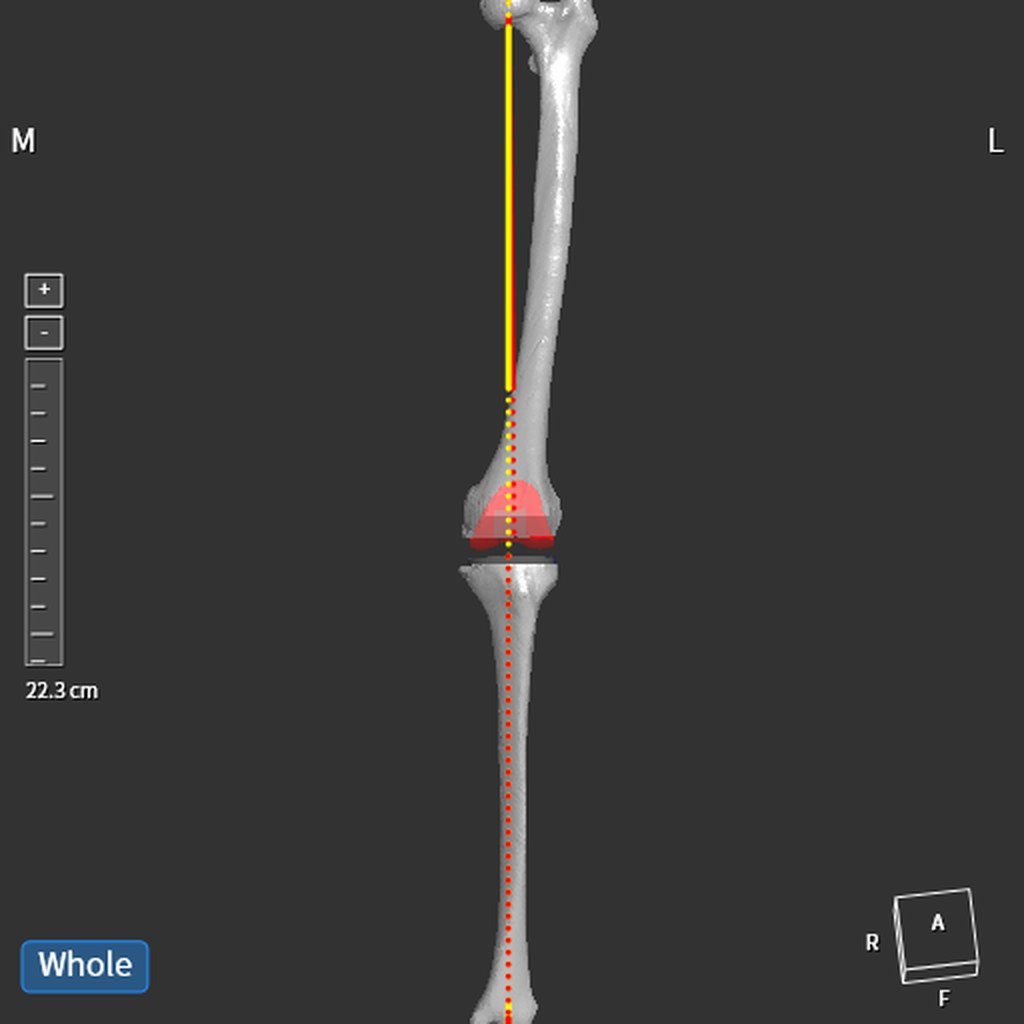
The whole leg, showing how weight passes through the knee and how far the alignment is from straight.
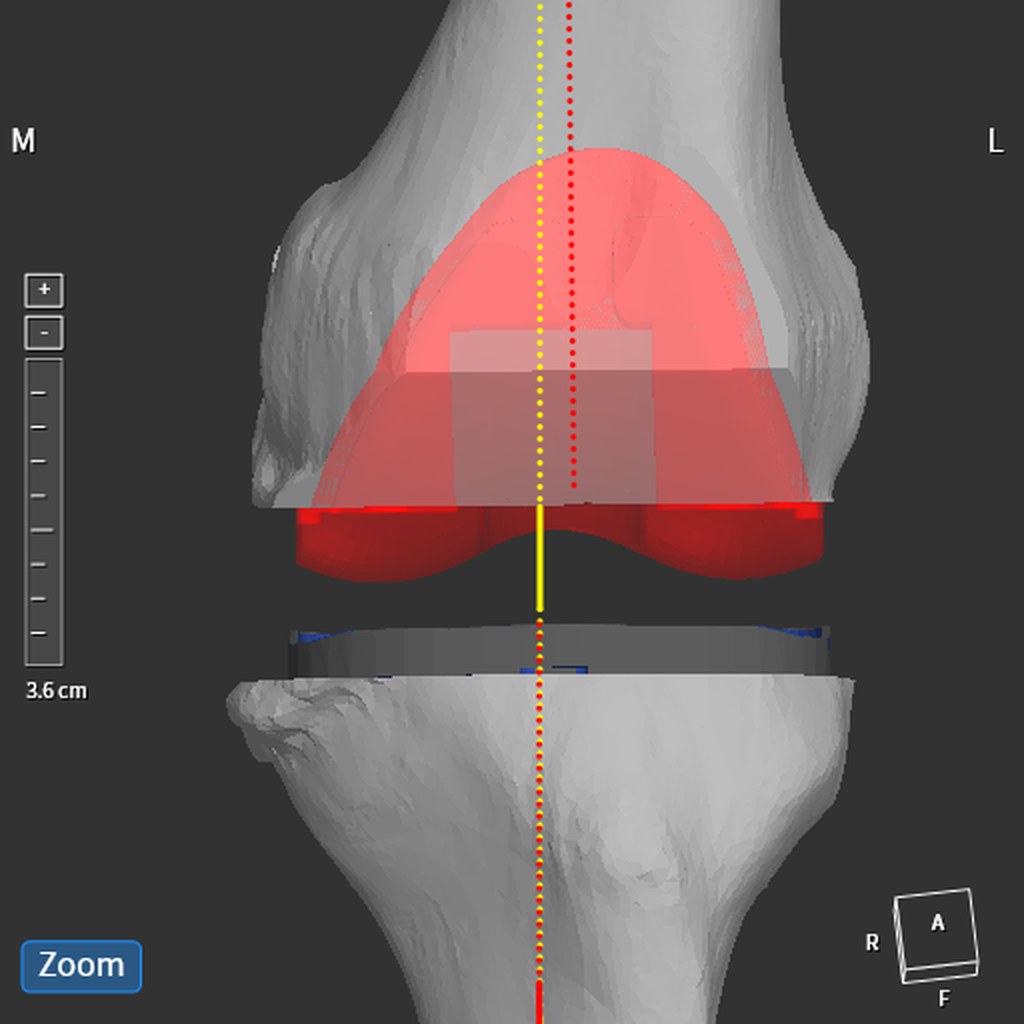
The planned implant position on the end of the thigh bone, with the bone cuts marked in red.
Plans from one patient’s knee replacement, shared with permission. All patient details have been removed.
Knee procedures offered
Total Knee Replacement
Robotic or conventional, with the subvastus approach where suitable.
Partial Knee Replacement
Microplasty technique when only one part of the knee is worn.
Complex Deformity
Knees where bow-leg or knock-knee alignment complicates surgery.
Revision Surgery
Replacement of a worn or loosened implant from earlier surgery.
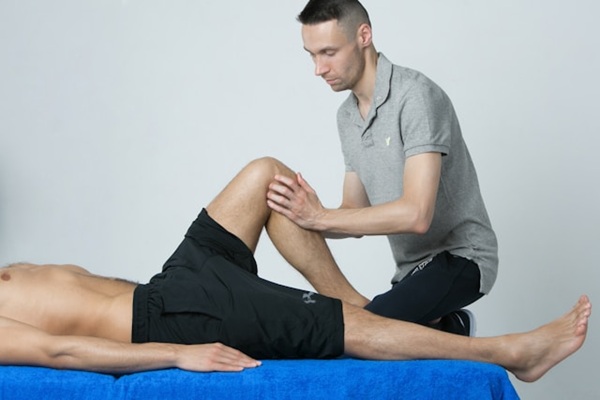
Before surgery
When surgery isn’t the answer yet
Surgery is considered when arthritis is severe and these measures no longer control pain or protect your mobility. If they still work for you, that is the recommendation you will hear.
Strengthening exercise and physiotherapy
Weight management and activity changes
Pain relief medicines, as prescribed
Injections, in selected cases
Risks and limitations
Risks, complications and limitations
Every knee replacement carries risk, whatever the technique or implant. Your individual risks are discussed with you before any decision is made.
Infection
Uncommon, but taken seriously before, during and after surgery.
Blood clots
Reduced with early walking and preventive measures after surgery.
Stiffness or ongoing pain
Some joints stay stiff or sore. Physiotherapy is the main defence.
Implant wear over time
Implants can wear or loosen after many years and may need revision.
Why Dr. Patel
Why patients choose Dr. Patel for knee replacement
Robotic planning
Knee replacement planned on a 3D model of your own knee.
Revision expertise
A dedicated fellowship in revision arthroplasty — for knees that have had surgery before.
Fellowship-trained
Arthroplasty training at Chang Gung Memorial Hospital, Taiwan.
Honest advice
Including when surgery isn’t the right answer yet.
Published research
Five peer-reviewed publications in orthopaedics.
Ahmedabad and Gandhinagar
Consulting at Health1 Thaltej, Ahmedabad and SGS Health1 Kudasan, Gandhinagar.
Common questions
Questions patients ask
Still unsure? Bring your questions to the consultation — that is what it is for.
A way of opening the knee from beneath the vastus medialis muscle, so the quadriceps tendon is not cut. It can mean less early pain and quicker return of leg control.
Not for everyone. Ceramic-surface implants are designed to reduce bearing wear and are often considered for younger, more active patients. The right implant is discussed at consultation.
A knee implant with a titanium-niobium-nitride coating, which is gold in colour. It is mainly used for patients with a nickel or metal allergy, and is not made of gold.
Not always. Its advantage is clearest with deformity or previous surgery. Whether it suits your knee is discussed honestly at consultation.
Most patients take their first steps with support the same or the next day, and most walk unaided by weeks three to six.
Most patients go home within 2–4 days, once walking safely with support.
Modern implants commonly last 15–20 years or more, depending on age, weight and activity.
Sometimes, if you are otherwise healthy. Decided case by case.
Patient stories
Back on their feet after knee replacement
Patients describe their knee replacement journey in their own words.
Two sisters, side by side to knee replacement
Both knees operated together
Book a consultation
See Dr. Patel in Ahmedabad or Gandhinagar
A consultation tells you where you stand — including whether you need surgery at all.
AhmedabadHealth1 Super Speciality Hospital, Shilaj Circle, Thaltej
10:00 AM – 12:00 PM & 4:00 – 6:00 PM, by prior appointment
GandhinagarSGS Health1 Hospital, Pramukh Anand Orbit Mall, Kudasan
8:00 – 10:00 AM, by prior appointment
OPD visitsVijapur · Idar · Himmatnagar · Visnagar · Mehsana
AppointmentsBy prior appointment only — call +91 75678 70528 to confirm the day.
How to book
- Call or WhatsApp the clinic.
- Choose Ahmedabad or Gandhinagar, and a time that suits you.
- Bring previous X-rays, reports and a list of your medicines.