Between muscles, not through them.
Hard, smooth, low-wear surfaces.
Hip replacement
Hip Replacement in Ahmedabad
By Dr. Kalpesh C. Patel · Consultant Orthopaedic Surgeon
Total hip replacement through the muscle-sparing direct anterior approach, with ceramic bearing options — aimed at a quicker recovery and a stable hip.
M.S. Orthopaedics
Arthroplasty fellowship, Taiwan
Practising since 2016
Practising in Ahmedabad
Your surgeon
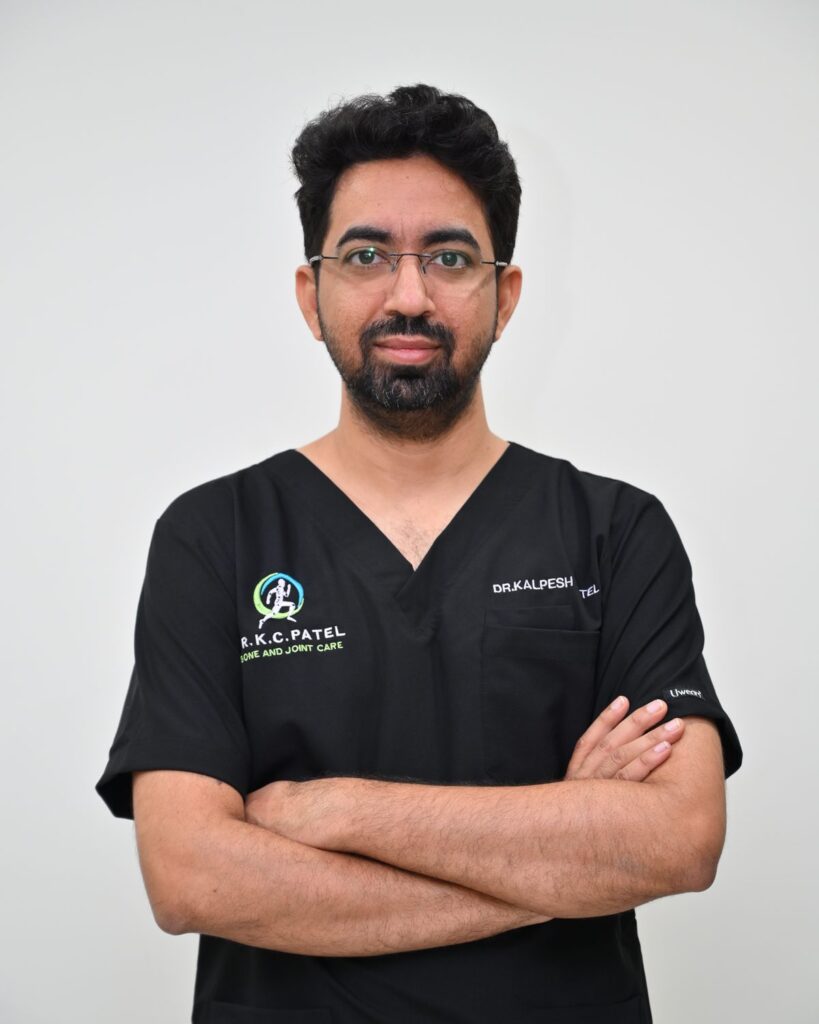
Meet Dr. Kalpesh C. Patel
Consultant Joint Replacement & Shoulder Surgeon
Dr. Patel trained in arthroplasty at Chang Gung Memorial Hospital in Taiwan and holds fellowships in revision arthroplasty and shoulder surgery. He has practised in Ahmedabad since 2016, with a focus on knee and hip replacement — including robotic-assisted and revision surgery.
M.B.B.S.
M.S. Orthopaedics
International Fellowship · Joint Replacement, Taiwan
Fellowship · Shoulder & Sports Injury, Pune
Years in orthopaedics
Fellowships
Peer-reviewed publications
Understanding the procedure
What is total hip replacement?
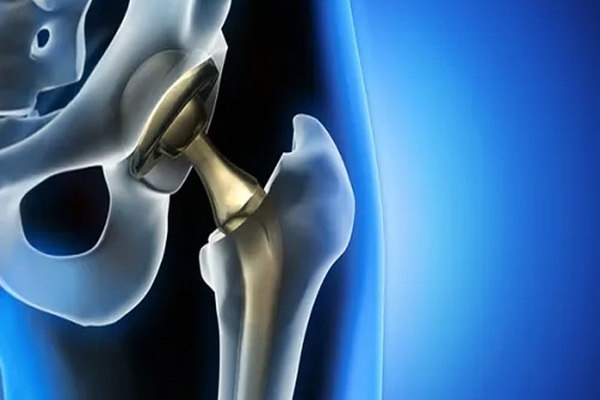
The worn ball and socket of the hip are replaced. A cup is fixed into the pelvis, a stem into the thigh bone, and a new ball sits on the stem. The ball and the liner it moves in — the bearing — can be ceramic, metal or high-grade plastic.
It is considered for hip arthritis, avascular necrosis (loss of blood supply to the ball of the hip) and some hip fractures, once pain limits everyday life.
When to book an appointment
- Groin pain limiting walking distance
- Stiffness putting on shoes or socks
- X-ray showing advanced hip arthritis
- Pain disturbing sleep
When it may not be needed yet
- Hip pain that still responds to exercise, weight management or medication
- Early arthritis with good day-to-day function
- Pain coming from the back rather than the hip — checked at assessment
How it is done
Direct anterior approach and ceramic hips
Two choices that shape how your new hip feels and how long it lasts.
Direct anterior approach (DAA)
The hip is reached from the front, through a natural gap between muscles, so no major muscle or tendon is detached from the bone.
Quicker early recovery
Sparing the muscles can mean less early pain and an earlier return to walking, stairs and daily activity.
Low dislocation risk
The tissues at the back of the hip that help keep it stable are left undisturbed, so the risk of dislocation is low and fewer movement restrictions are usually needed.
Ceramic hip replacement
A ceramic ball, with a ceramic or highly cross-linked plastic liner, is very hard and smooth and produces very little wear over time.
Built for active patients
Low-wear ceramic bearings are often chosen for younger and more active patients.
Cemented or uncemented
The stem and cup can be press-fitted into bone or fixed with cement, depending on your age and bone quality.
Dual mobility & Oxinium
Dual-mobility bearings add stability where the risk of dislocation is higher; Oxinium is a hard, low-wear ceramicised surface.
Planned for your hip
The approach and implant are chosen for your anatomy, bone quality and build — the anterior approach is not ideal for every hip.
Direct anterior vs posterior approach
| Posterior approach | Direct anterior approach | |
|---|---|---|
| Access | From the back of the hip | From the front of the hip |
| Muscles | Small rotator muscles detached, then repaired | Separated along natural gaps, not detached |
| Movement precautions | Usually stricter for the first weeks | Usually fewer |
| Dislocation risk | Low with modern repair techniques | Low |
| Suited to | Almost all hips, including complex revisions | Most first-time hip replacements |
Hip procedures offered
Total Hip Replacement
Through the direct anterior approach where suitable.
Ceramic Hip Replacement
Low-wear ceramic bearings for active patients.
Navigation-Assisted Hip Replacement
Cup position and leg length measured during surgery.
Revision Surgery
Replacement of a worn, loosened or unstable hip implant.
Before surgery
When surgery isn’t the answer yet
Hip replacement is considered when arthritis is severe and these measures no longer control pain or protect your mobility. If they still work for you, that is the recommendation you will hear.
Strengthening exercise and physiotherapy
Weight management and activity changes
Pain relief medicines, as prescribed
A walking stick to offload the hip
Risks and limitations
Risks, complications and limitations
Every hip replacement carries risk, whatever the approach or bearing. Your individual risks are discussed with you before any decision is made.
Infection
Uncommon, but taken seriously before, during and after surgery.
Blood clots
Reduced with early walking and preventive measures after surgery.
Dislocation
Uncommon. Any precautions for your hip are explained before discharge.
Why Dr. Patel
Why patients choose Dr. Patel for hip replacement
Muscle-sparing hip surgery
Trained in minimal-access, muscle-sparing hip replacement.
Revision expertise
A dedicated fellowship in revision arthroplasty — for hips that have had surgery before.
Fellowship-trained
Arthroplasty training at Chang Gung Memorial Hospital, Taiwan.
Honest advice
Including when surgery isn’t the right answer yet.
Published research
Five peer-reviewed publications in orthopaedics.
Ahmedabad and Gandhinagar
Consulting at Health1 Thaltej, Ahmedabad and SGS Health1 Kudasan, Gandhinagar.
Common questions
Questions patients ask
Still unsure? Bring your questions to the consultation — that is what it is for.
A way of reaching the hip from the front, through a natural gap between muscles, so no major muscle is detached from the bone.
No. Body shape, anatomy and previous surgery all matter. The best approach for your hip is discussed at consultation.
Usually fewer than with other approaches. Any precautions for your hip are explained clearly before discharge.
A hip replacement whose ball — and sometimes liner — is made of ceramic, a very hard, smooth material that wears very little.
Most patients stand with support the same day, and most walk independently by weeks three to six.
Most patients go home within 2–4 days, once walking safely with support.
Leg length is checked carefully during surgery. Small differences can remain but are minimised.
Book a consultation
See Dr. Patel in Ahmedabad or Gandhinagar
A consultation tells you where you stand — including whether you need surgery at all.
AhmedabadHealth1 Super Speciality Hospital, Shilaj Circle, Thaltej
10:00 AM – 12:00 PM & 4:00 – 6:00 PM, by prior appointment
GandhinagarSGS Health1 Hospital, Pramukh Anand Orbit Mall, Kudasan
8:00 – 10:00 AM, by prior appointment
OPD visitsVijapur · Idar · Himmatnagar · Visnagar · Mehsana
AppointmentsBy prior appointment only — call +91 75678 70528 to confirm the day.
How to book
- Call or WhatsApp the clinic.
- Choose Ahmedabad or Gandhinagar, and a time that suits you.
- Bring previous X-rays, reports and a list of your medicines.