True hip pain is usually felt in the groin.
Checked at assessment.
Home / Conditions / Hip Arthritis
Condition
Hip Arthritis: Symptoms and Treatment in Ahmedabad
By Dr. Kalpesh C. Patel · Consultant Orthopaedic Surgeon
Hip arthritis usually shows itself as groin pain and difficulty putting on shoes and socks. It is treated by stage, and hip replacement is one of the most reliable operations in orthopaedics.
M.S. Orthopaedics
Arthroplasty fellowship, Taiwan
Practising since 2016
Practising in Ahmedabad
Your surgeon
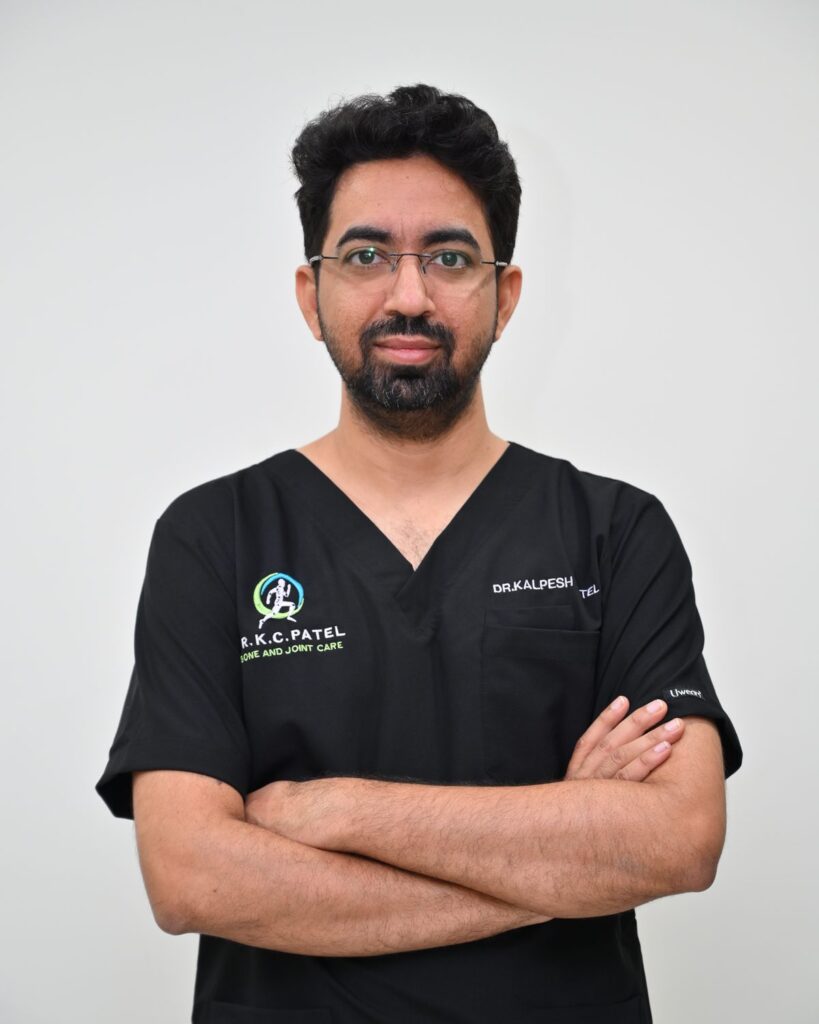
Meet Dr. Kalpesh C. Patel
Consultant Joint Replacement & Shoulder Surgeon
Dr. Patel trained in arthroplasty at Chang Gung Memorial Hospital in Taiwan and holds fellowships in revision arthroplasty and shoulder surgery. He has practised in Ahmedabad since 2016, with a focus on knee and hip replacement — including robotic-assisted and revision surgery.
M.B.B.S.
M.S. Orthopaedics
International Fellowship · Joint Replacement, Taiwan
Fellowship · Shoulder & Sports Injury, Pune
Years in orthopaedics
Fellowships
Peer-reviewed publications
Understanding the condition
What is hip arthritis?
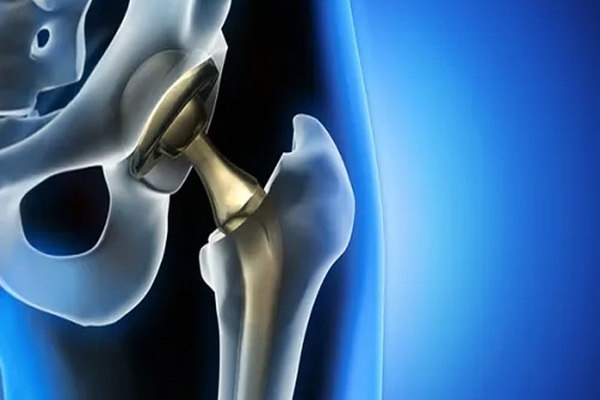
The hip is a ball and socket joint lined with cartilage. When that lining wears, the joint becomes stiff and painful, most often in the groin and sometimes down the front of the thigh to the knee.
Not all hip pain is arthritis. Pain from the lower back, from the tendons on the outer side of the hip, or from avascular necrosis — where the ball loses its blood supply — can feel similar, and each needs different treatment. That is why examination comes before any plan.
Common symptoms
- Groin pain on walking or standing up
- Difficulty putting on shoes and socks or cutting toenails
- Stiffness after sitting
- A limp, or the leg feeling shorter
- Pain referred to the thigh or knee
See a doctor sooner if
- You cannot bear weight after a fall
- The hip is hot and swollen with fever
- Pain is constant and wakes you at night
- You are on long-term steroids and develop new hip pain
Causes
What causes hip arthritis
The treatment depends on the cause as much as the stage.
Wear over time
Osteoarthritis, the commonest cause, where the cartilage thins with age and load.
Avascular necrosis
The ball of the hip loses its blood supply and collapses. It can affect younger patients and often needs earlier surgery.
Childhood hip conditions
Dysplasia and other childhood problems leave a socket that wears early.
After injury
A fracture involving the hip joint can lead to arthritis years later.
Treatment options for hip arthritis
From activity changes through to replacement, depending on the stage and the cause.
Non-surgical care
Strengthening, weight management, a walking stick, and medication as prescribed.
Hip Replacement
Through the muscle-sparing direct anterior approach where suitable, with ceramic bearing options.
Navigation-Assisted Hip Replacement
Cup position and leg length measured during surgery with Intellijoint navigation.
Revision Hip Replacement
For a hip replacement that has loosened, worn or become unstable.
First steps
What to try before surgery
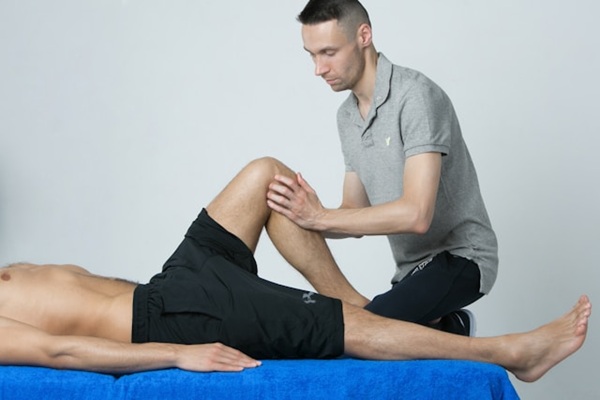
These help many patients with early hip arthritis, and are recommended before an operation is considered.
Strengthening exercise and physiotherapy
Weight management and activity changes
Pain relief medicines, as prescribed
A walking stick to offload the hip
Getting assessed
What an assessment involves
The first job is to be sure the pain is coming from the hip at all. Bring previous X-rays and a list of your medicines.
Examination
How the hip moves, where the pain is, how you walk, and whether the leg lengths differ.
X-rays
A pelvis X-ray shows the joint space, the shape of the socket and the state of the ball.
Checking the back
Back problems often mimic hip pain, so the spine is examined as well.
MRI where needed
Used mainly where avascular necrosis or a soft-tissue cause is suspected.
Why Dr. Patel
Why patients come for a hip opinion
Muscle-sparing approaches
Trained in minimal-access hip replacement, including the direct anterior approach.
The right diagnosis first
Hip, back and soft-tissue causes are separated before any surgery is discussed.
Fellowship-trained
Arthroplasty training at Chang Gung Memorial Hospital, Taiwan.
Honest advice
Including when surgery isn’t the right answer yet.
Published research
Five peer-reviewed publications in orthopaedics.
Ahmedabad and Gandhinagar
Consulting at Health1 Thaltej, Ahmedabad and SGS Health1 Kudasan, Gandhinagar.
Common questions
Questions patients ask
Still unsure? Bring your questions to the consultation — that is what it is for.
Usually in the groin, sometimes down the front of the thigh to the knee. Pain on the outer side is more often from tendons.
It is major surgery, but it is also one of the most reliable operations in orthopaedics for relieving pain.
Not always. Avascular necrosis and dysplasia often need earlier treatment, and waiting too long can make surgery harder.
Leg length is checked during surgery and small differences can remain, but they are minimised.
Most patients stand with support the same day and walk independently by weeks three to six.
Book a consultation
See Dr. Patel in Ahmedabad or Gandhinagar
A consultation tells you where you stand — including whether you need surgery at all.
AhmedabadHealth1 Super Speciality Hospital, Shilaj Circle, Thaltej
10:00 AM – 12:00 PM & 4:00 – 6:00 PM, by prior appointment
GandhinagarSGS Health1 Hospital, Pramukh Anand Orbit Mall, Kudasan
8:00 – 10:00 AM, by prior appointment
OPD visitsVijapur · Idar · Himmatnagar · Visnagar · Mehsana
AppointmentsBy prior appointment only — call +91 75678 70528 to confirm the day.
How to book
- Call or WhatsApp the clinic.
- Choose Ahmedabad or Gandhinagar, and a time that suits you.
- Bring previous X-rays, reports and a list of your medicines.