Without surgery.
Some knees should be seen quickly.
Home / Conditions / Knee Pain
Condition
Knee Pain: Causes and When to See a Surgeon
By Dr. Kalpesh C. Patel · Consultant Orthopaedic Surgeon
Knee pain has many causes, and most of them are not arthritis. Where the pain is, and what brings it on, usually points to the answer.
M.S. Orthopaedics
Arthroplasty fellowship, Taiwan
Practising since 2016

Practising in Ahmedabad
Your surgeon
Meet Dr. Kalpesh C. Patel
Consultant Joint Replacement & Shoulder Surgeon
Dr. Patel trained in arthroplasty at Chang Gung Memorial Hospital in Taiwan and holds fellowships in revision arthroplasty and shoulder surgery. He has practised in Ahmedabad since 2016, with a focus on knee and hip replacement — including robotic-assisted and revision surgery.
M.B.B.S.
M.S. Orthopaedics
International Fellowship · Joint Replacement, Taiwan
Fellowship · Shoulder & Sports Injury, Pune
Years in orthopaedics
Fellowships
Peer-reviewed publications
Understanding the symptom
Why does my knee hurt?
The knee is a large joint with cartilage, two menisci, four main ligaments and the kneecap running in a groove at the front. Pain can come from any of them, and from the hip or back as well.
The pattern matters more than the intensity. Pain with swelling within hours of a twist suggests a ligament or meniscus injury. Pain at the front on stairs suggests the kneecap. Pain that has crept up over years, with stiffness in the morning, suggests arthritis.
Book an appointment if
- The knee gives way, locks or catches
- Swelling keeps coming back
- Pain has lasted more than six weeks
- You are limping or avoiding stairs
- Painkillers are becoming routine
Seek care urgently if
- You cannot bear weight after an injury
- The knee is hot, red and swollen with fever
- There is obvious deformity after trauma
- You have numbness or a cold foot below the knee
Causes
Where the pain is, and what it usually means
A guide, not a diagnosis. Examination is what separates these.
Arthritis
Gradual pain and stiffness over years, worse on stairs and standing up, sometimes with swelling and a bow-legged shape.
Meniscus tear
Pain on the joint line after a twist, with catching or locking and swelling that comes and goes.
Ligament injury
Giving way after a sporting injury, often with swelling within hours of the injury.
Kneecap pain
Aching at the front, worse on stairs, squatting and after sitting for a long time.
Tendon and bursa problems
Localised tenderness just above or below the kneecap, often after a change in activity.
Referred pain
Pain felt at the knee but coming from the hip or the lower back — checked at assessment.
Where treatment goes from here
Most knees are treated without surgery. These are the routes when they are not.
Joint Preservation
Strengthening, injections, cartilage and meniscus surgery, or realignment to protect your own knee.
Arthroscopy
Keyhole surgery for a knee that locks or catches, or for a repairable meniscus tear.
Sports Injuries
Ligament reconstruction and a return-to-sport plan based on testing.
Knee Replacement
For arthritis that limits daily life once other treatments have stopped working.
First steps
What helps most knees
Simple measures settle a large share of knee pain, particularly when they are started early and done properly.
Relative rest, then a graded return to activity
Strengthening the thigh and hip muscles
Weight management where it applies
Pain relief medicines, as prescribed
Getting assessed
What an assessment involves
The aim of the first visit is a clear diagnosis, not an operation. Bring previous X-rays or scans and a list of your medicines.
History
When it started, what brings it on, whether it swells, locks or gives way.
Examination
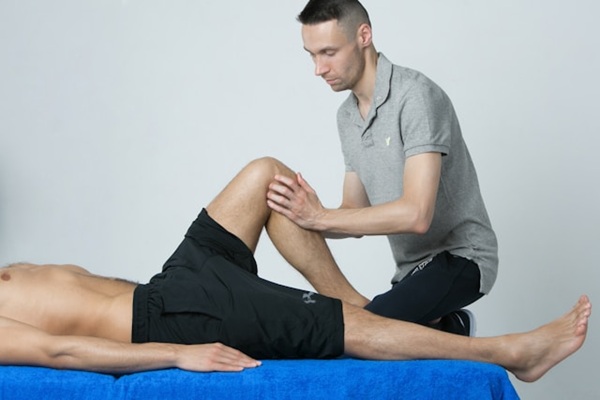
Movement, ligament stability, meniscus tests, kneecap tracking and how you walk.
X-rays
Standing X-rays where arthritis is suspected, which show the true joint space.
MRI when it changes the plan
Used for suspected ligament, meniscus or cartilage injury — not for every painful knee.
Why Dr. Patel
Why patients come for a knee opinion
Diagnosis first
The cause is established before any treatment is recommended.
Surgery only when it helps
Many knees do not need an operation, and you will be told so plainly.
Fellowship-trained
Arthroplasty training at Chang Gung Memorial Hospital, Taiwan.
Honest advice
Including when surgery isn’t the right answer yet.
Published research
Five peer-reviewed publications in orthopaedics.
Ahmedabad and Gandhinagar
Consulting at Health1 Thaltej, Ahmedabad and SGS Health1 Kudasan, Gandhinagar.
Common questions
Questions patients ask
Still unsure? Bring your questions to the consultation — that is what it is for.
Not usually. X-rays answer most questions about arthritis. An MRI is used when a ligament, meniscus or cartilage injury is suspected.
It means the joint is irritated. Recurrent swelling is worth assessing, particularly if the knee also catches or gives way.
Yes. Hip and back problems can both refer pain to the knee, which is why they are examined too.
It can settle symptoms in selected patients, but it treats the pain rather than the cause.
If pain lasts more than six weeks, keeps returning, or the knee locks or gives way, have it assessed.
Book a consultation
See Dr. Patel in Ahmedabad or Gandhinagar
A consultation tells you where you stand — including whether you need surgery at all.
AhmedabadHealth1 Super Speciality Hospital, Shilaj Circle, Thaltej
10:00 AM – 12:00 PM & 4:00 – 6:00 PM, by prior appointment
GandhinagarSGS Health1 Hospital, Pramukh Anand Orbit Mall, Kudasan
8:00 – 10:00 AM, by prior appointment
OPD visitsVijapur · Idar · Himmatnagar · Visnagar · Mehsana
AppointmentsBy prior appointment only — call +91 75678 70528 to confirm the day.
How to book
- Call or WhatsApp the clinic.
- Choose Ahmedabad or Gandhinagar, and a time that suits you.
- Bring previous X-rays, reports and a list of your medicines.