

In short
A partial knee replacement suits arthritis confined to one compartment, with an intact ACL and a correctable deformity. Where more of the joint is involved, a total replacement is the more reliable operation. Partials recover faster early on but are revised more often later.
Patients often arrive having read that a partial knee replacement is “smaller”, “quicker” or “better”, and want to know why it has not been offered. The honest answer is that it is a good operation for a narrow group of people, and the decision is made by what the knee looks like on examination and imaging — not by preference.
What the two operations actually are
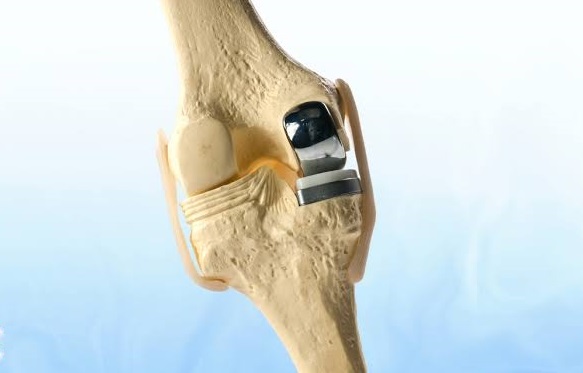
The knee has three compartments: the inner (medial), the outer (lateral), and the joint between the kneecap and the thigh bone. A total knee replacement resurfaces the whole joint. A partial (unicompartmental) replacement resurfaces only one compartment and leaves the rest of the knee — including your own cruciate ligaments — untouched.
That preserved ligament is the reason a partial knee often feels more like a natural knee afterwards. It is also the reason the operation is only possible when the rest of the joint is genuinely healthy.
What decides it
Broadly, a partial replacement is considered when:
- arthritis is confined to one compartment, confirmed on weight-bearing X-rays;
- the anterior cruciate ligament is intact;
- the deformity is correctable — the leg can be brought back towards straight on examination;
- the knee still has a reasonable range of movement.
Where arthritis involves more than one compartment, where the ligaments are deficient, or where there is significant fixed deformity or inflammatory arthritis, a total replacement is the more reliable operation. Choosing a partial in the wrong knee tends to mean revision surgery sooner rather than later.
Recovery differences
Partial replacements generally involve a smaller incision, less blood loss and a faster early recovery. That difference is most noticeable in the first few weeks. By several months, patients who had the right operation for their knee tend to do well either way.
The revision question
This matters and is often glossed over. Partial replacements are revised more often than total replacements — usually because arthritis progresses in the compartments that were left alone. A partial that later needs revision is generally converted to a total replacement. That is a reasonable trade for the right patient, but it should be a known trade, not a surprise.
The three answers that largely decide it: which compartments are affected on your X-rays, whether the ACL is intact, and whether the deformity is correctable.
What to ask
If you want to understand your own case, the useful questions are: which compartments are affected on my X-rays, is my ACL intact, and is my deformity correctable? Those three answers largely determine which operation is appropriate.
This article is general information, not medical advice. Every case differs — please discuss your own situation in consultation.